
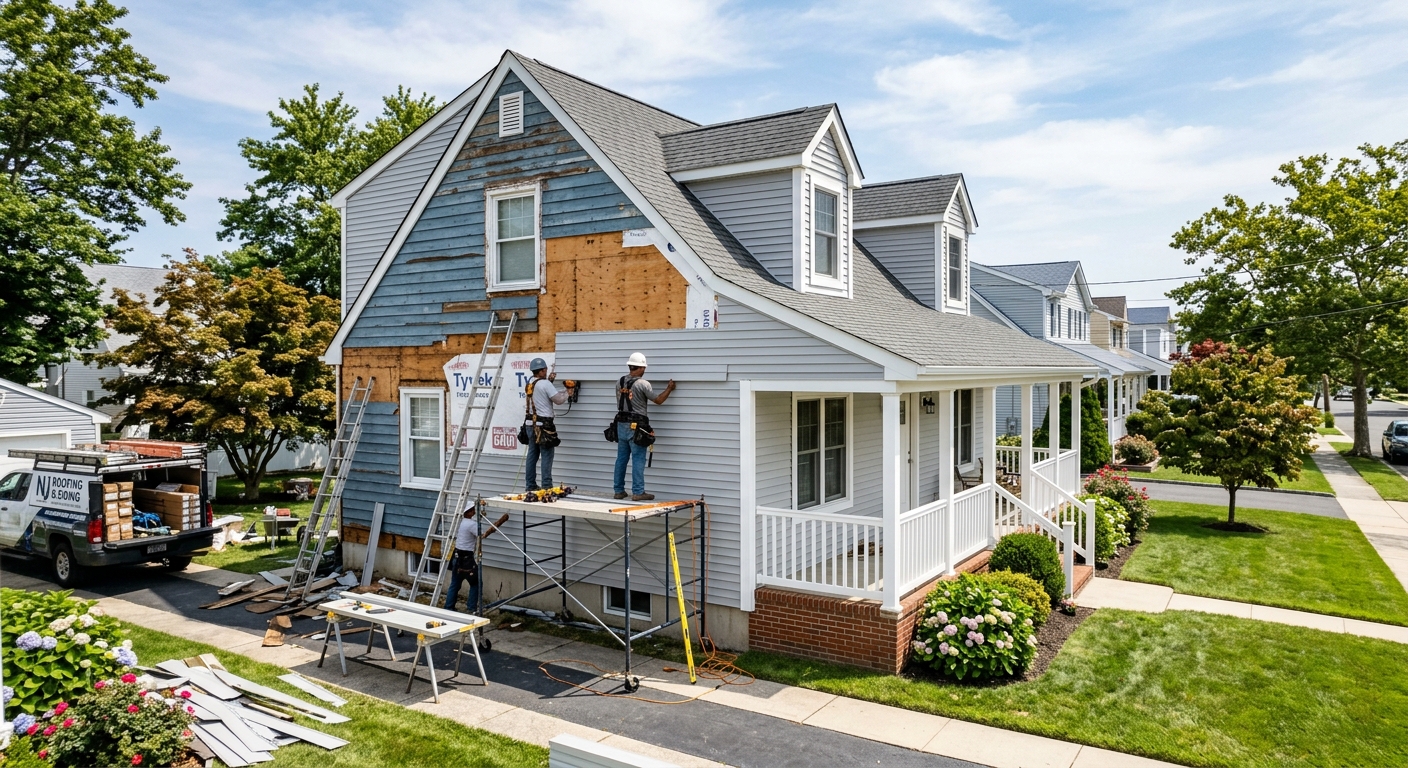
Vinyl Siding Cost in 2026: Complete Pricing Guide for NJ Homeowners
Vinyl siding cost in New Jersey typically runs $8 to $18 per square foot installed, depending on the grade of material and the complexity of the job. Understanding vinyl siding cost before you request quotes helps you evaluate bids accurately and avoid paying for work you do not need.
This guide covers pricing by material grade, total cost by house size, how vinyl compares to fiber cement and wood, and the specific factors that affect what you will pay in Ocean County and Monmouth County.
Vinyl Siding Cost Per Square Foot by Grade
Vinyl siding is sold in three broad grades. The grade determines thickness, rigidity, color retention, and how the finished product looks on your home. Labor is the same regardless of grade, so upgrading the material adds a relatively modest cost to the total project.
| Grade | Material Cost (per sq ft) | Installed Cost (per sq ft) | Panel Thickness |
|---|---|---|---|
| Economy (builder grade) | $1.00 - $2.50 | $5.00 - $9.00 | 0.040" - 0.042" |
| Mid-range | $2.50 - $4.50 | $9.00 - $13.00 | 0.044" - 0.046" |
| Premium | $4.50 - $7.00 | $13.00 - $18.00 | 0.048" - 0.055" |
| Insulated vinyl | $5.50 - $9.00 | $14.00 - $20.00 | 0.048"+ with foam backer |
Prices above are broad ranges. Your actual installed cost will vary based on old siding removal, trim work, and your home's specific geometry. Homes with complex rooflines, multiple dormers, or extensive trim work on Ocean County shore homes often land at the higher end of these ranges.
Economy Grade Vinyl Siding
Economy or builder-grade vinyl is the thinnest option, typically 0.040 to 0.042 inches. It flexes when you push on it, and the color tends to fade faster in direct sun. It is a functional product for rentals or investment properties where budget is the primary concern.
In coastal NJ, economy-grade vinyl is a poor choice for any home within a few miles of the water. Thin panels flex and rattle in wind, and the color degradation from UV and salt air is noticeably faster than with premium options.
Mid-Range Vinyl Siding
Mid-range vinyl at 0.044 to 0.046 inches is the most common upgrade from builder grade. It has better rigidity, holds color longer, and offers a wider variety of profiles and textures. Most standard residential re-siding jobs in Monmouth County and Ocean County land in this category.
Premium and Insulated Vinyl Siding
Premium vinyl at 0.048 inches and above offers the best rigidity, the most realistic wood-grain textures, and the longest color warranties. Manufacturers like CertainTeed, James Hardie (vinyl line), and Alside offer premium panels with 30 to lifetime fade warranties.
Insulated vinyl adds a molded foam backer to the panel. The insulation does not add meaningful R-value on its own (typically R-2 to R-3), but it eliminates the hollow sound when you knock on it, significantly improves rigidity, and can modestly improve energy performance when combined with house wrap and proper installation.
Get an Accurate Siding Estimate for Your NJ Home
Express Home Services - Licensed & Insured
📞 (609) 361-7686Total Vinyl Siding Cost by House Size
The square footage of siding on your home does not equal your home's living area. A two-story house has more exterior wall surface than a ranch of the same footprint. Siding contractors measure in "squares" (100 square feet each), so a 2,000 square foot home might require 20 to 30 squares of siding depending on its shape and height.
The table below gives rough total project costs for full re-siding jobs in NJ. These figures include mid-range vinyl material, installation labor, house wrap, and old siding removal.
| Home Size | Estimated Siding Squares | Mid-Range Installed Cost | Premium Installed Cost |
|---|---|---|---|
| 1,200 sq ft ranch | 16 - 20 squares | $12,000 - $18,000 | $18,000 - $26,000 |
| 1,800 sq ft colonial | 22 - 28 squares | $16,000 - $25,000 | $24,000 - $38,000 |
| 2,400 sq ft colonial | 28 - 36 squares | $20,000 - $32,000 | $30,000 - $50,000 |
| 3,000 sq ft two-story | 35 - 45 squares | $26,000 - $40,000 | $38,000 - $60,000 |
These are estimates, not bids. A contractor needs to measure your home, assess the existing siding condition, and review trim and soffit scope before giving you an accurate number. Get at least two itemized written estimates before committing.
Factors That Affect Vinyl Siding Cost in NJ
The grade of material is only one variable. Several additional factors affect what you will actually pay for a siding job in New Jersey.
Old Siding Removal
Removing existing siding adds labor cost and disposal fees. Most re-siding jobs require tear-off, and it is generally the right call, as installing new siding over old creates a wavy surface and traps moisture. Expect $1.50 to $3.00 per square foot for tear-off and disposal, depending on the material being removed and how many layers are present.
If your home has wood clapboard from the 1970s or earlier, test for lead paint before anyone starts work. Lead paint removal requires specific handling and disposal procedures in New Jersey.
Trim, Soffit, and Fascia
Siding quotes often do not automatically include soffit and fascia replacement. These components deteriorate on a similar timeline as the siding and are far cheaper to replace when the scaffolding is already up than as a separate project later. Ask your contractor to include a line item for soffit, fascia, corner posts, and J-channel in every quote so you are comparing apples to apples.
Trim replacement typically adds $1,500 to $4,000 to a project depending on how much is involved. Aluminum soffit and fascia is common and cost-effective; wood trim that has softened or rotted needs replacement before new siding goes on.
Foam Insulation Board
Installing rigid foam insulation board (typically 0.5 to 1 inch) under new siding adds $1.50 to $3.50 per square foot to the installed cost but improves your home's thermal envelope. In older NJ homes with minimal wall insulation, foam board under siding can reduce heating and cooling costs meaningfully.
For homes in Monmouth County and Ocean County with natural gas heat, this upgrade often has a 5 to 10 year payback period in energy savings, depending on your home's existing insulation and how much you run the heat.
NJ Labor Rates
New Jersey labor rates are higher than the national average. Siding installers in Ocean County and Monmouth County typically charge $3.50 to $6.00 per square foot for labor alone, compared to a national average closer to $2.50 to $4.00. This is partly a cost-of-living factor and partly due to licensing requirements.
Always hire a siding contractor with an active NJ Home Improvement Contractor (HIC) license. You can verify any contractor's registration through the NJ Division of Consumer Affairs website. Working with an unlicensed contractor voids most manufacturer warranties and leaves you without recourse if the work is defective.
House Wrap and Moisture Barrier
New house wrap should be installed under new siding on any re-siding project. Modern housewraps (Tyvek HomeWrap and similar products) are vapor-permeable, which allows moisture to escape from the wall assembly while blocking wind and bulk water infiltration. Do not re-side over old, torn, or missing house wrap. A good contractor will include new house wrap as a standard part of the scope, not an upsell.
Vinyl Siding vs. Fiber Cement vs. Wood: Cost Comparison
Vinyl is the most popular siding material in New Jersey for re-siding projects, but it is not the only option. Here is how it compares to the two most common alternatives.
| Material | Installed Cost (per sq ft) | Lifespan | Maintenance | Paint Required |
|---|---|---|---|---|
| Vinyl (mid-range) | $9 - $13 | 20 - 40 years | Very low | No |
| Vinyl (premium/insulated) | $14 - $20 | 30 - 50 years | Very low | No |
| Fiber cement (HardiePlank) | $12 - $20 | 50+ years | Low (repaint every 10-15 yrs) | Yes (pre-finished available) |
| Engineered wood | $10 - $16 | 20 - 30 years | Low-moderate | Yes |
| Natural wood (cedar) | $18 - $35 | 20 - 40 years | High (paint/stain every 5-7 yrs) | Yes |
Fiber cement is a strong competitor to premium vinyl, particularly for homeowners who want a product that can be repainted and holds paint exceptionally well. James Hardie fiber cement products are widely used in Ocean County and have a strong track record on coastal homes. The installed cost is similar to premium vinyl, and the product is not subject to the UV fading concerns that affect even premium vinyl panels over time.
Wood siding is a much higher-maintenance choice and is rarely the right call for NJ coastal homes given the salt air, moisture, and the labor involved in keeping it properly painted or stained.
Coastal NJ Considerations: Salt Air, Wind Rating, and Siding Selection
Homes in Ocean County, Long Beach Island, Barnegat, Stafford Township, and bayfront areas of Monmouth County face conditions that inland homeowners do not. Salt air accelerates the degradation of exterior materials. Wind-driven rain puts pressure on siding joints and installation details that are not a factor on sheltered inland properties.
Salt Air and UV Exposure
Vinyl siding manufactured for coastal use should carry a fade warranty of at least 10 years, and premium coastal products carry lifetime fade warranties. The key is the TiO2 (titanium dioxide) content in the formulation and the color you select. Lighter colors like white and beige hold up better than darker colors in high-UV coastal environments.
Ask your contractor or material supplier to show you the manufacturer's warranty specifically for salt air environments. Some standard residential warranties have geographic exclusions or reduced coverage for homes within a set distance from salt water.
Wind Rating
Siding panels have rated wind resistance. In Ocean County and coastal Monmouth County, wind events from nor'easters and remnant tropical storms can exceed 60 mph. Premium vinyl and insulated vinyl panels typically carry higher wind ratings than economy grade.
Look for panels rated to at least 110 mph, and confirm that the installation method (fastening pattern, overlap) meets the manufacturer's installation requirements for high-wind areas. A product installed incorrectly will fail at wind speeds well below its rated resistance.
When to Replace vs. Repair Siding on a Shore Home
Minor siding damage from storm debris is repairable if you can match the color of the existing panels. In practice, color matching is difficult on siding that has been in place for 10 or more years. If more than 15 to 20 percent of the panels are damaged or need replacement, full re-siding is usually more cost-effective than patching.
If a major storm has caused siding damage, have your roof inspected at the same time. The same storm that knocks siding panels loose often damages shingles, flashing, and trim. For a full breakdown of roof replacement costs in New Jersey, see our roof replacement cost guide.
ROI and Energy Savings From Vinyl Siding Replacement
New siding improves curb appeal, reduces maintenance costs, and can modestly reduce energy bills. The return on investment for siding replacement in New Jersey is generally considered solid compared to many other exterior home improvements.
Resale Value
National remodeling industry data (Remodeling Magazine Cost vs. Value report) consistently shows vinyl siding replacement recovering 70 to 80 percent of cost at resale. In a competitive real estate market like Ocean County and Monmouth County, fresh siding often makes a meaningful difference in buyer perception and can reduce time on market.
Energy Savings
Replacing deteriorating siding and adding foam insulation board can reduce air infiltration and improve the thermal performance of your walls. In older NJ homes with inadequate wall insulation, this upgrade can reduce annual heating and cooling costs by 5 to 15 percent, though this figure varies widely with home age, existing insulation, and HVAC efficiency.
Insulated vinyl siding adds modest R-value (R-2 to R-3) to the wall assembly, which is not transformative on its own but contributes to overall energy performance when combined with air sealing and proper installation technique.
Maintenance Cost Reduction
Wood siding on a NJ coastal home that needs painting every 5 to 7 years at $3,000 to $8,000 per paint job represents a real ongoing cost. Converting to vinyl eliminates that recurring expense. Over a 20-year period, the maintenance savings from switching off wood to premium vinyl can offset a meaningful portion of the initial siding replacement cost.
If you are planning a full exterior renovation that also includes new windows as part of the project, ask your contractor about coordinating both projects together. The scaffolding, staging, and trim work overlap significantly, and combining the projects typically reduces total labor cost versus doing them separately.
If you are planning a custom home build on the Jersey Shore, siding selection deserves the same careful attention as foundation type, given the coastal exposure.
Frequently Asked Questions About Vinyl Siding Cost
How much does vinyl siding cost per square foot installed in NJ?
Vinyl siding cost installed in New Jersey typically runs $8 to $18 per square foot for mid-range to premium material. Economy grade can come in at $5 to $9 per square foot installed, but it is rarely the right choice for shore homes or homes that will be sold within 10 years. These prices include labor, house wrap, and standard trim, but confirm scope with your contractor, as soffit and fascia are sometimes priced separately.
How much does it cost to reside a 2,000 square foot house in NJ?
A 2,000 square foot home in NJ typically has 22 to 30 squares of siding surface, depending on its shape and number of stories. At mid-range vinyl pricing, expect a total project cost of $16,000 to $28,000 including tear-off and house wrap. Premium vinyl or fiber cement on the same home could run $25,000 to $40,000. These are rough ranges, and your actual cost depends on old siding removal, trim scope, and whether you add insulation board.
Is insulated vinyl siding worth the extra cost in NJ?
Insulated vinyl siding costs $2 to $5 more per square foot installed than non-insulated premium vinyl. In NJ, where winters are real and energy costs are relatively high, the answer is often yes for homeowners planning to stay in the home for 10 or more years. The energy savings are modest on their own, but the improved rigidity, reduced sound transmission, and elimination of the hollow knock make the product feel substantially more substantial. It is particularly worth considering on older homes with minimal wall insulation.
How long does vinyl siding last in coastal NJ?
Mid-range vinyl siding installed correctly typically lasts 20 to 30 years in NJ coastal conditions. Premium vinyl with UV-stabilized formulations can last 30 to 40 years. The variables are installation quality (gaps, improper fastening, and missing house wrap accelerate failure), maintenance (keeping it clean reduces mold and UV degradation), and how close to salt water the home sits. Homes within half a mile of the ocean or bay in Ocean County should plan on the lower end of those ranges for economy and mid-range products.
What is the difference between vinyl siding and fiber cement siding?
Vinyl siding is a plastic (PVC) product with color integrated into the material. Fiber cement is a composite of cement, sand, and cellulose fibers that must be painted and can be repainted. Vinyl requires virtually no maintenance. Fiber cement holds paint better than wood and can be repainted any color on a 10 to 15 year cycle. Fiber cement is heavier, which makes installation more labor-intensive and adds cost, but it is more resistant to impact and does not fade the way vinyl can over time. In coastal NJ, fiber cement's paintability and impact resistance make it a strong competitor to premium vinyl at a similar price point.
Do I need a permit to replace siding in NJ?
Most NJ municipalities require a building permit for full siding replacement. The permit requirement exists to ensure the work is inspected and that proper installation, house wrap, and fire blocking are in place. Permit costs are typically $150 to $500 for a residential siding job. A reputable contractor will pull the permit themselves before starting work. If a contractor asks you to pull your own permit or suggests skipping it, treat that as a warning sign.
What should I look for in a siding contractor in NJ?
Verify the contractor's NJ Home Improvement Contractor (HIC) license number through the NJ Division of Consumer Affairs before signing anything. Ask for proof of general liability insurance and workers' compensation coverage. Request references from completed siding jobs in your county, specifically from jobs completed in the last two years. Get a written contract that details the specific product (manufacturer, product line, and color), scope of work including tear-off and trim, and a payment schedule tied to completion milestones, not arbitrary dates.
Ready for a Siding Estimate in Ocean County or Monmouth County?
Express Home Services installs vinyl siding, fiber cement siding, and replacement windows for homeowners throughout Ocean County and Monmouth County, NJ. We bring direct experience with coastal construction requirements including wind-rated installation and salt air environments.
We are licensed (HIC #13VH13950500) and insured, with active general liability and workers' compensation coverage on every project.
Call (609) 361-7686 to schedule a free siding estimate. We will measure your home, review your options, and give you a written proposal that breaks down material and labor costs so you can compare it accurately against any other quote you receive.