
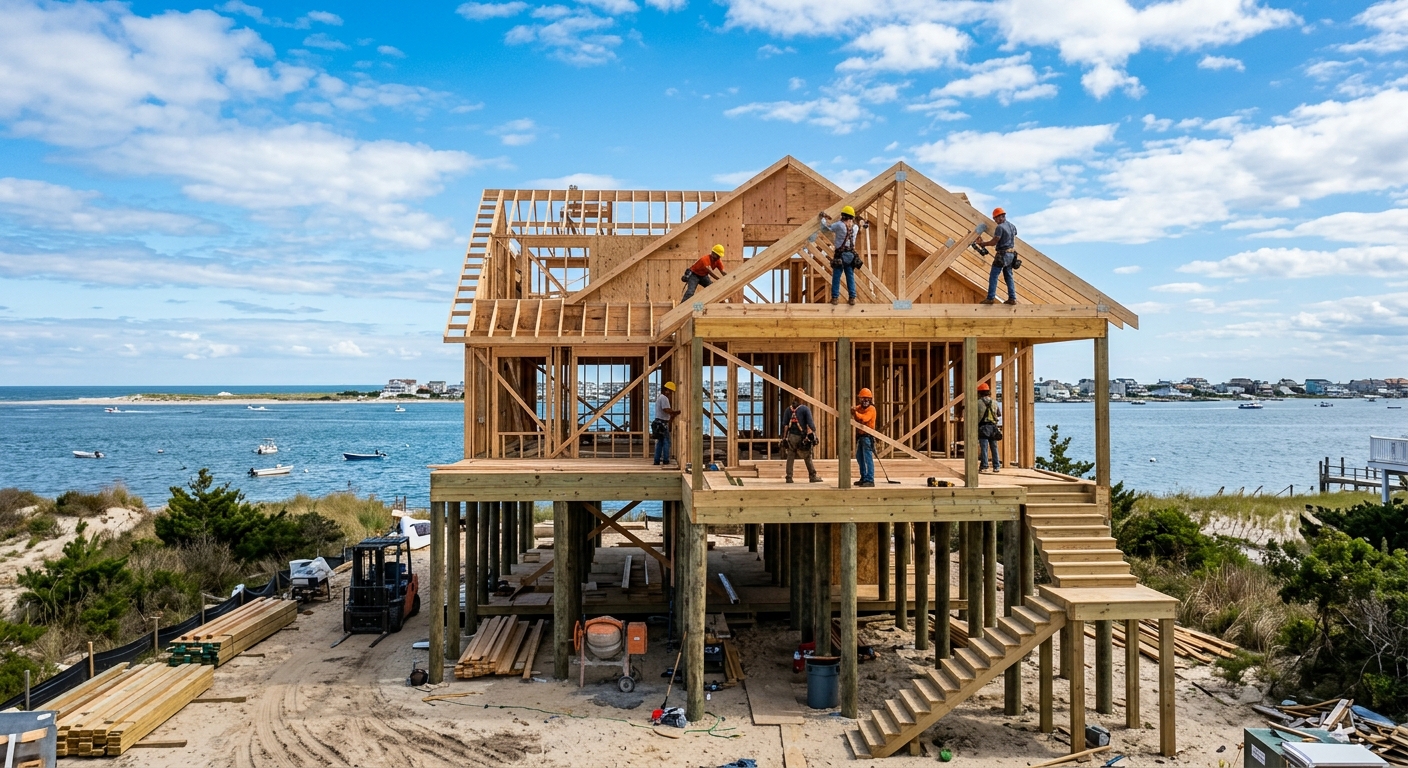
Building a Home on the Jersey Shore: What You Need to Know Before You Break Ground
Building a home on the Jersey Shore is a different project than building anywhere else in New Jersey. The barrier islands, bayfront lots, and low-lying coastal areas that make Ocean County and Monmouth County so desirable also bring a set of regulatory, engineering, and insurance requirements that most inland builders have never encountered.
This guide covers what you need to know before you purchase a lot, hire a builder, or apply for permits on a custom coastal home. Whether you are looking at Long Beach Island, Barnegat, Stafford Township, or Long Beach Township, the fundamentals of building a home on the Jersey Shore apply throughout this region.
Why Building a Home on the Jersey Shore Is Different From Building Inland
New Jersey's coast was fundamentally reshaped by Superstorm Sandy in 2012. Post-Sandy, FEMA updated its flood insurance rate maps for much of Ocean County, and local municipalities tightened their own construction requirements to match. The result is a building environment where flood zone classification, base flood elevation, and freeboard requirements directly determine what you can build, how high off the ground it must sit, and how much it will cost to insure.
Building a home on the Jersey Shore today means designing around these requirements from the beginning, not retrofitting to meet them after the fact.
Key Factors That Make Coastal NJ Construction Unique
- Flood zone designation (AE, VE, X, or shaded X) controls foundation type and minimum floor elevation
- FEMA Flood Insurance Rate Maps (FIRMs) set the Base Flood Elevation (BFE) for every parcel
- Many Ocean County municipalities require freeboard, which is additional elevation above BFE
- Coastal wind load requirements affect framing, roof design, and window specifications
- Lot fill, grading, and drainage must comply with local stormwater management rules
Planning a Custom Home on the Jersey Shore? Talk to Our Team First.
Express Home Services - Licensed & Insured (HIC #13VH13950500)
📞 (609) 361-7686Understanding Flood Zones Before You Buy a Lot
Before you fall in love with a specific lot, look up its flood zone designation. FEMA's Flood Map Service Center (msc.fema.gov) lets you enter any address and view the applicable flood insurance rate map. The zone designation has a direct impact on your construction cost, your flood insurance premium, and your financing options.
Common Flood Zone Designations in Ocean County
| Zone | Description | Construction Implications |
|---|---|---|
| AE | High-risk flood zone with established BFE | Elevated foundation required; flood insurance mandatory for federally-backed mortgages |
| VE | Coastal high-hazard zone (wave action) | Most restrictive zone; pile or pier foundations required; no fill allowed under home |
| X (unshaded) | Minimal flood risk | Standard construction typically allowed; flood insurance not required but recommended |
| X (shaded) | Moderate flood risk | Standard construction allowed; flood insurance strongly recommended |
Most buildable lots on Long Beach Island, in Barnegat Bay communities, and along the bayfront in Stafford Township and Long Beach Township fall in AE or VE zones. This is not a reason to avoid building a home on the Jersey Shore, but it is information you need before you negotiate a purchase price on raw land.
Base Flood Elevation and Freeboard
Your lot's BFE is the elevation at which there is a 1 percent annual chance of flooding. Your finished floor must be at or above BFE. Many Ocean County municipalities require freeboard, meaning your finished floor must be one or two feet above BFE.
Freeboard requirements reduce your flood insurance premiums significantly. For every foot your lowest floor sits above BFE, your annual NFIP flood insurance premium drops. On a $400,000 coastal home, this difference can be hundreds of dollars per year over the life of the policy.
Elevated Foundations: Your Options When Building a Home on the Jersey Shore
Elevated construction is the standard on the Jersey Shore, not the exception. The foundation type you select affects the cost of the home, the aesthetics, and your insurance rate.
Piling Foundations
Piling foundations are the most common choice on barrier islands and in VE zones. Wood pilings (typically pressure-treated Southern Yellow Pine) or concrete pilings are driven into the ground below the expected scour depth. The home sits on top of the piling grid with open space below.
The open area beneath a pile-supported home must remain free of solid obstruction in flood zones. That means no enclosed storage rooms, no finished basement, and no solid masonry walls below the BFE. You can have an open parking area, utility connections, and breakaway walls that are designed to fail under flood load without damaging the structure above.
Elevated Slab or Crawl Space With Fill
In AE zones where wave action is not the primary concern, some builders use a raised slab or elevated crawl space with fill to reach the required elevation. This approach tends to cost less than piling construction but does not qualify for the same insurance rating benefits in certain flood map configurations.
Stem Wall Construction
A reinforced masonry stem wall with an elevated floor system is another option in moderate AE zones. This approach looks similar to a conventional house from the exterior but places the finished floor well above grade. Stem wall construction is common in Barnegat, Stafford Township, and inland Ocean County areas where lots are not in VE zones.
Foundation Cost Comparison
| Foundation Type | Typical Cost Premium Over Standard | Best Zone Application |
|---|---|---|
| Piling (wood) | $25,000-$60,000 | VE zones, barrier island AE |
| Piling (concrete) | $40,000-$90,000 | VE zones, high-scour AE |
| Elevated slab with fill | $10,000-$25,000 | Moderate AE zones inland |
| Stem wall | $15,000-$35,000 | AE zones, moderate flood risk |
These ranges are rough estimates that vary with lot conditions, required elevation height, and piling depth. A structural engineer familiar with Ocean County soil conditions is essential before finalizing foundation design.
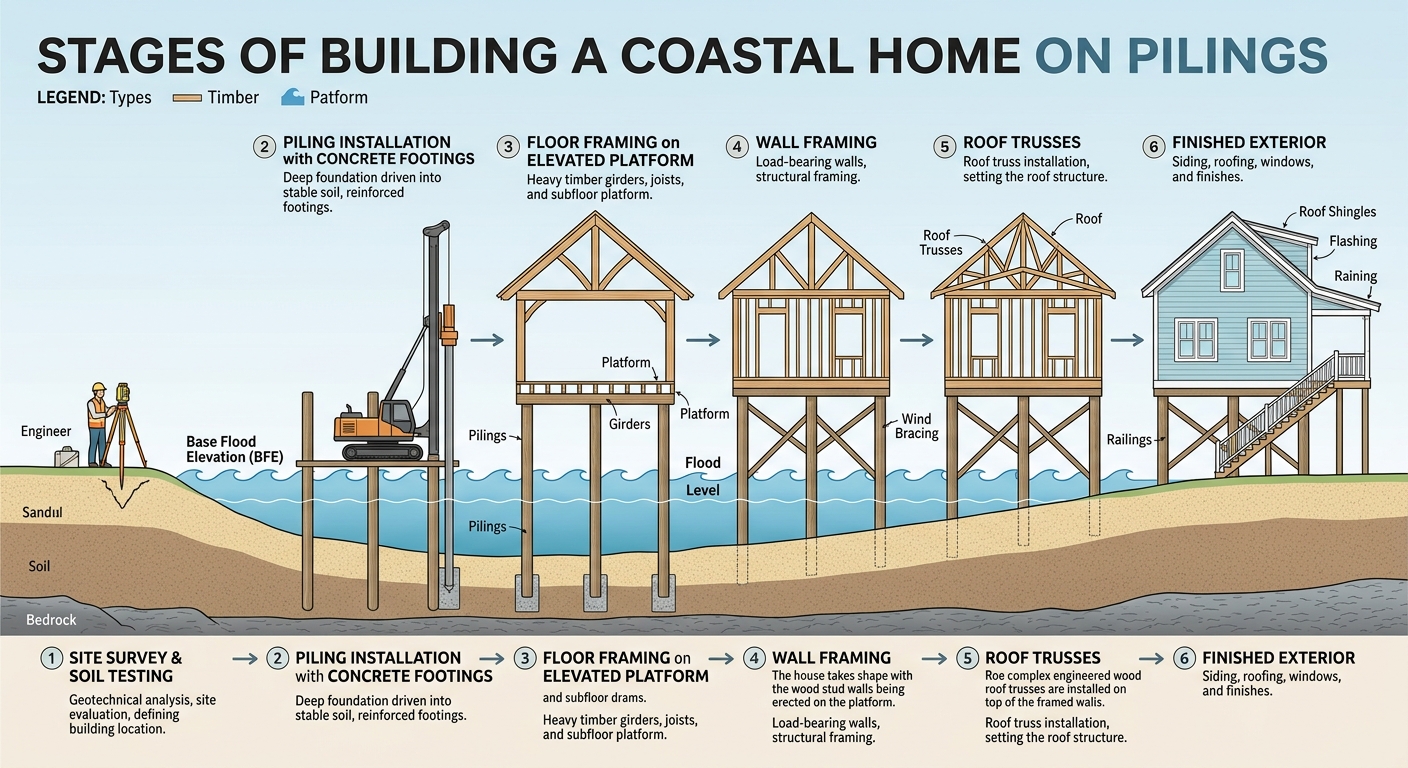
Coastal Building Codes and Wind Load Requirements
New Jersey uses the International Building Code with state amendments. Coastal construction in Ocean County must also comply with wind load requirements tied to the county's designation as a coastal zone.
Wind Speed Design Requirements
New Jersey's coastal counties use a higher design wind speed than inland areas. This affects:
- Roof framing connections (hurricane straps and clips are required, not optional)
- Sheathing fastener patterns
- Window and door impact ratings
- Roof-to-wall connection engineering
Ask your builder or architect to confirm that the design documents specify compliance with the applicable wind zone requirements. This is not something to verify at the end of construction - it needs to be in the plans before permits are issued.
Coastal wind and storm exposure is also why the roof on a shore home deserves special attention after any significant storm. Learn how to identify roof damage after a storm so you know what to look for after your home is built.
Corrosion-Resistant Hardware
All metal hardware in coastal construction should be hot-dip galvanized or stainless steel. Standard zinc-plated fasteners and connectors corrode rapidly in salt air environments. The salt air at LBI, Barnegat Bay, and similar locations accelerates metal corrosion at a rate that surprises homeowners who have only built or renovated in inland areas.
This applies to:
- Joist hangers, hurricane straps, and structural connectors
- Deck hardware and fasteners
- Exterior door and window hardware
- HVAC and plumbing penetration flashing
Specifying the correct hardware grade adds a modest cost upfront and avoids structural issues that emerge within five to ten years in buildings where standard hardware was used.
Lot Selection on the Jersey Shore: What to Evaluate
Not all lots are equal in coastal Ocean County, and the purchase price of the land is only one variable. Before purchasing a lot for building a home on the Jersey Shore, evaluate:
Elevation Certificate
Request an elevation certificate for the lot if one exists. This document, prepared by a licensed surveyor, shows the lot's elevation relative to BFE and will be required when you apply for building permits and flood insurance. If no elevation certificate exists, budget $500 to $1,000 to have one prepared as part of your due diligence.
Lot Coverage Limits
Most Ocean County municipalities limit the percentage of a lot that can be covered by impervious surfaces, including the home footprint, driveway, and accessory structures. In some LBI communities, lot coverage limits are as low as 25 to 30 percent. This directly affects the size of home you can build on a given lot.
Setbacks and Coastal Zone Management Act Requirements
The New Jersey Coastal Zone Management Act (part of CAFRA, the Coastal Area Facility Review Act) governs development in coastal areas. Many lots in Ocean County require a CAFRA permit or are in a CAFRA zone that restricts or regulates development. Your builder or attorney should confirm CAFRA applicability before you close on raw land.
Utilities and Site Work
Check whether the lot has access to public water and sewer, or whether it requires a well and septic system. Many Ocean County lots, particularly in less-developed areas of Barnegat, Stafford, and Long Beach Township, are on private septic systems. The location of the septic system affects where you can place the home on the lot and adds cost to the project.
Pre-Purchase Due Diligence Checklist
Before closing on any lot for a Jersey Shore home, confirm:
- Flood zone designation verified at FEMA Flood Map Service Center
- Elevation certificate obtained or ordered
- CAFRA applicability confirmed by builder or attorney
- Lot coverage limits reviewed with local zoning office
- Public water and sewer availability confirmed
- Deed restrictions and HOA covenants reviewed
- Soil conditions evaluated (some bayfront lots have fill material unsuitable for pilings)
Insurance Considerations When Building a Home on the Jersey Shore
Insurance on a new Jersey Shore home involves two distinct coverage types that work together, and both need to be in place before you close.
Flood Insurance
Flood insurance in FEMA-designated high-risk zones (AE and VE) is required for any home financed with a federally-backed mortgage. It is also available to homes outside high-risk zones, and it is worth carrying.
The National Flood Insurance Program (NFIP) is the primary source of flood coverage, though private flood insurance options have expanded since 2020 and can offer higher limits and sometimes lower premiums. The elevation of your lowest floor relative to BFE is the single most important factor in determining your annual NFIP premium.
Homeowners Insurance
Standard homeowners insurance does not cover flood damage. Homeowners insurance covers wind, fire, theft, and liability. Coastal homes in Ocean County tend to carry higher homeowners insurance premiums than inland properties due to wind exposure. Shop this coverage before you break ground so the annual cost is factored into your housing budget.
Build Right the First Time - Coastal NJ Experts on Every Project
Express Home Services - Licensed & Insured (HIC #13VH13950500)
📞 (609) 361-7686Construction Timeline for Building a Home on the Jersey Shore
Building a custom home on the Jersey Shore takes longer than building a comparable home inland. The regulatory layers, permitting, and the involvement of CAFRA and municipal review add time at the front end.
Realistic Timeline Phases
| Phase | Estimated Duration |
|---|---|
| Lot acquisition and due diligence | 30 to 90 days |
| Design and engineering | 2 to 4 months |
| Permit applications (local + CAFRA if applicable) | 2 to 6 months |
| Site work and foundation | 4 to 8 weeks |
| Framing | 4 to 8 weeks |
| Mechanical rough-in (HVAC, plumbing, electric) | 4 to 6 weeks |
| Inspections and insulation | 2 to 3 weeks |
| Drywall and interior finish | 6 to 10 weeks |
| Exterior siding, roofing, windows | Running concurrently with interior |
| Trim, cabinet, and fixture installation | 4 to 8 weeks |
| Punch list and final inspections | 2 to 4 weeks |
A realistic timeline from lot purchase to move-in for a custom home on Long Beach Island or in an Ocean County coastal community is 18 to 30 months. Projects that hit 12 to 14 months exist, but they typically involve lots where permits move quickly and no CAFRA review is required.
Hiring a Builder With Coastal NJ Experience
The most important hire you will make when building a home on the Jersey Shore is your general contractor. A builder who has worked only in inland Morris County or Burlington County may be technically competent but unfamiliar with the specific requirements of Ocean County coastal construction.
What to Confirm Before Hiring
- Verifiable experience with pile construction, elevated foundations, and coastal framing requirements
- Familiarity with CAFRA permitting and the Ocean County municipal building departments where you are building
- New Jersey Home Improvement Contractor (HIC) registration, verifiable through the NJ Division of Consumer Affairs
- Current general liability and workers' compensation insurance
- References from completed new construction projects in Ocean County or on LBI specifically
- A written contract with a detailed scope of work, payment schedule tied to construction milestones, and a process for handling change orders
Express Home Services has built custom homes in Ocean County communities including Long Beach Township, Stafford Township, and Barnegat. Our HIC license number is #13VH13950500.
Once the structure is complete, interior projects like a full bathroom remodel or a complete kitchen renovation follow the same contractor vetting process - always verify the HIC license and insurance before anyone starts work.
Frequently Asked Questions About Building a Home on the Jersey Shore
What does it cost to build a custom home on Long Beach Island or in Ocean County?
Custom home construction costs in Ocean County vary widely based on design, finishes, and site conditions. As of 2026, hard construction costs for new homes in coastal NJ typically run $275 to $450 per square foot for a well-built custom home, excluding land, soft costs (design, engineering, permits), and site work. Homes on piling foundations with high-end finishes in LBI communities can exceed $500 per square foot. Always get a detailed written estimate that separates hard costs from soft costs and site work.
Do I need a CAFRA permit to build on the Jersey Shore?
Many lots in Ocean County fall within the CAFRA zone, which requires a CAFRA permit from the New Jersey Department of Environmental Protection before you can build. Whether your specific lot requires a CAFRA permit depends on its location relative to tidal waters and mapped CAFRA boundaries. Your builder, architect, or land use attorney can confirm CAFRA applicability during due diligence. CAFRA review can add two to six months to your permitting timeline.
What foundation type is required in a VE flood zone on the Jersey Shore?
In VE zones, FEMA and most Ocean County municipalities require an open foundation on pilings or piers. Solid foundation walls, fill, and enclosed spaces below the BFE are not permitted in VE zones because they obstruct flood flow and create structural risk. The home must be elevated above the BFE (plus any required freeboard) on a piling grid. The space below must remain open and unobstructed, except for breakaway walls used for parking or utility access.
How does floor elevation affect flood insurance costs on the Jersey Shore?
For every foot your lowest floor sits above the BFE listed on FEMA's flood maps, your annual NFIP flood insurance premium decreases. The savings can be substantial. Building two feet above BFE instead of at BFE can reduce annual premiums by 30 to 60 percent depending on the zone and your home's value, according to FEMA's published rate tables. Many experienced Jersey Shore builders recommend building as high above BFE as your budget and aesthetic preferences allow, specifically because of the long-term insurance savings.
What is the typical construction timeline for a new home on LBI or in Ocean County?
From lot purchase to occupancy, plan on 18 to 30 months for a custom home in a coastal Ocean County community. The front-end permitting phase is the biggest variable. Lots requiring CAFRA permits and municipal review can take six months or longer just to get permits in hand. Once permits are issued, stick framing through final inspection typically runs nine to fourteen months depending on scope, weather, and contractor scheduling.
What should I look for in a Jersey Shore home builder?
Verify their NJ Home Improvement Contractor (HIC) registration number through the NJ Division of Consumer Affairs website. Ask specifically about their experience with pile construction, CAFRA permitting, and projects in Ocean County or Monmouth County coastal municipalities. Get references from completed projects, not just testimonials. Review their insurance certificates before signing anything. A builder who cannot produce a current certificate of insurance with your project named as additional insured should not be hired.
Ready to Build on the Jersey Shore?
Express Home Services builds custom homes in Ocean County, NJ, including Long Beach Island, Long Beach Township, Barnegat, Stafford Township, and surrounding communities. We handle everything from permit applications through final inspections, and we bring direct experience with coastal construction requirements specific to this region.
We are licensed (HIC #13VH13950500) and insured, with general liability and workers' compensation coverage on every project.
If your project includes a roof replacement as part of a tear-down rebuild, read our guide on whether to repair or replace your roof to understand when full replacement is the right call on an existing structure before new construction begins.
Call (609) 361-7686 to talk through your project. Whether you are at the lot-shopping stage or ready to start design, we can help you understand what is realistic, what it will cost, and what to expect from the process of building a home on the Jersey Shore.