
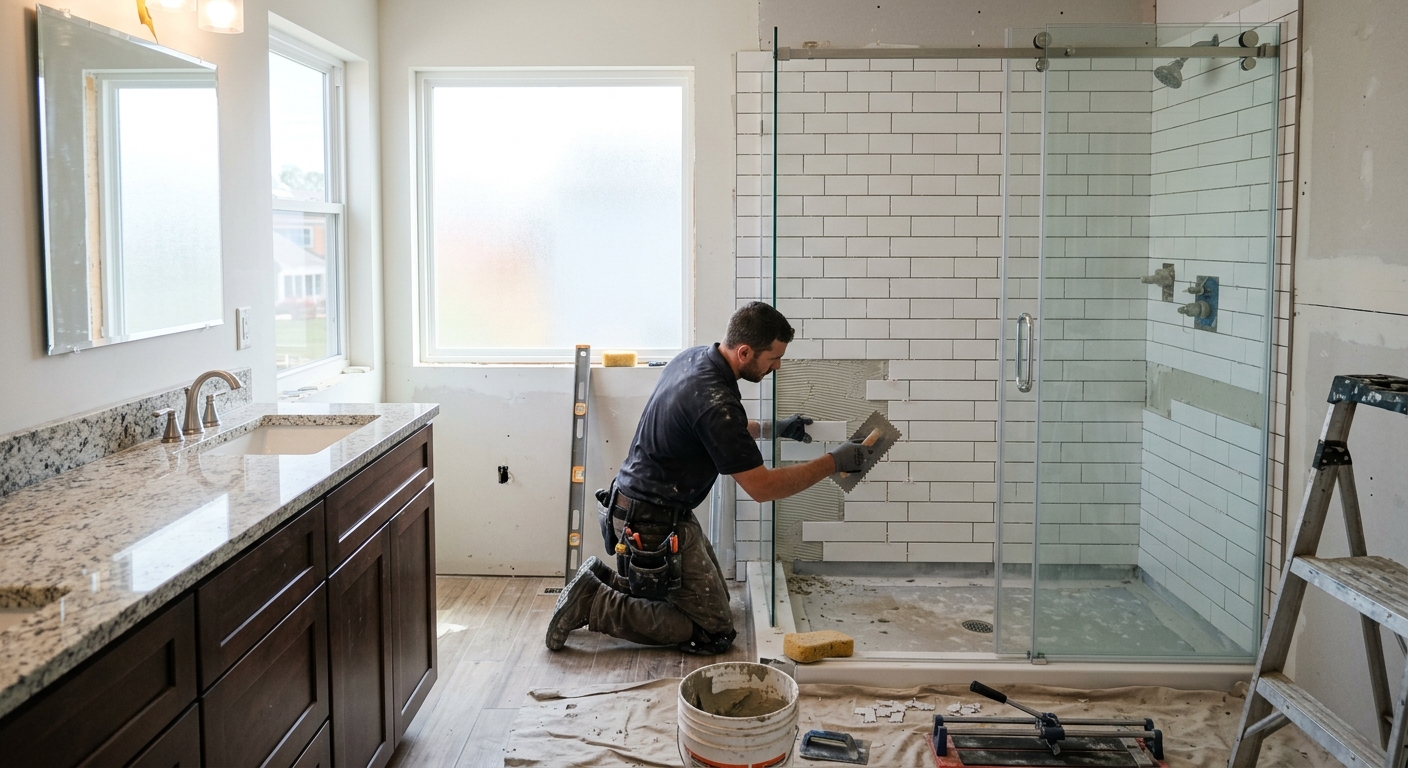
How to Plan a Bathroom Remodel in Ocean County, NJ: A Step-by-Step Guide
Planning a bathroom remodel in Ocean County NJ starts well before a single tile is pulled from the wall. The coastal climate, local permit requirements, and material choices specific to shore communities make this project different from a standard inland renovation. This guide walks you through every stage of the bathroom remodel Ocean County NJ planning process, from setting a realistic budget to choosing finishes that hold up in a humid, salt-air environment.
Whether you are remodeling a primary bath in Toms River, updating a guest bath in Brick, or overhauling a cramped bathroom on Long Beach Island, the planning steps are the same.
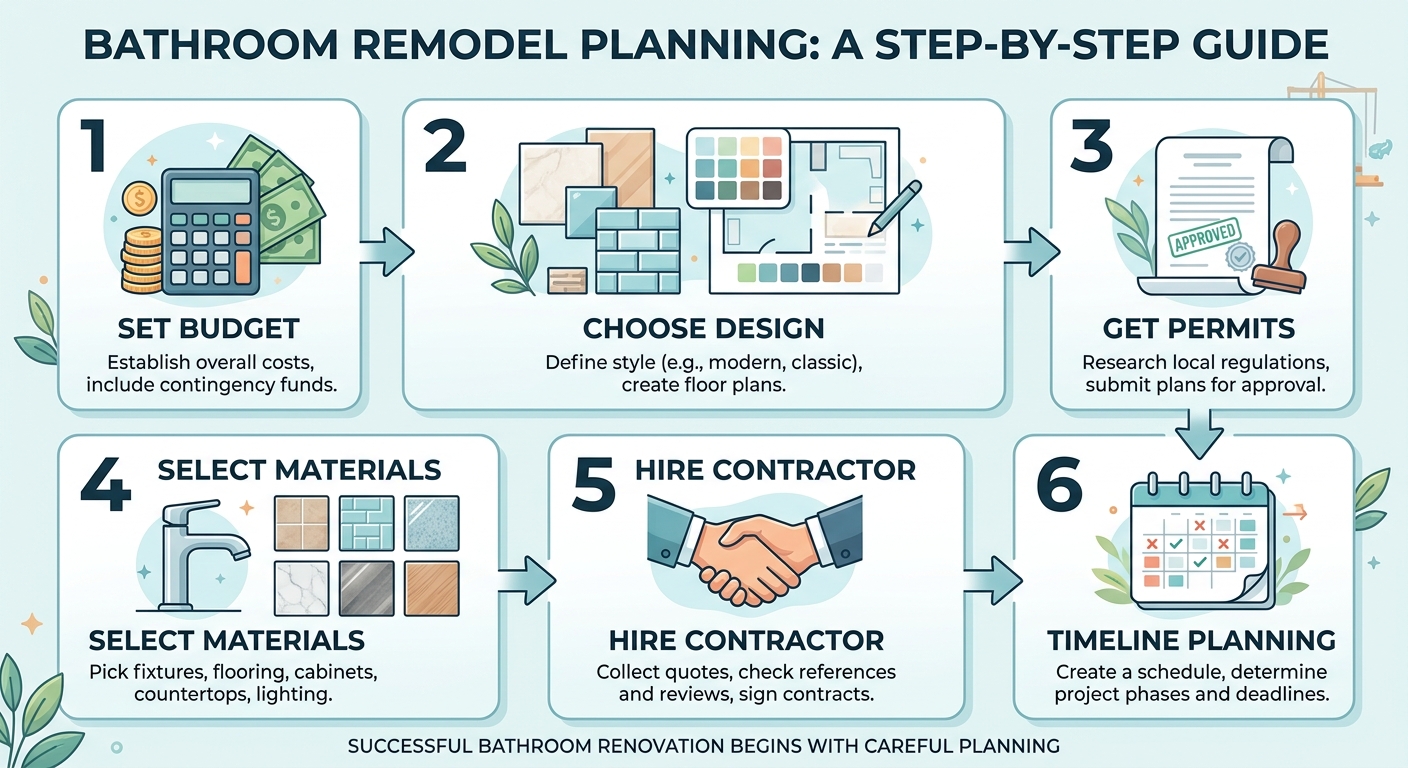
Step 1: Set a Realistic Budget for Your Ocean County Bathroom Remodel
A bathroom remodel in Ocean County, NJ typically costs between $8,000 and $35,000 depending on the scope of work, fixtures selected, and whether you are moving plumbing. Labor costs in Ocean County tend to run slightly higher than national averages due to the local cost of living and the availability of licensed tradespeople.
Use this table as a starting point when building your budget:
| Remodel Scope | Typical Cost Range | What Is Included |
|---|---|---|
| Cosmetic refresh | $3,000 - $8,000 | Paint, fixtures, vanity swap, lighting |
| Mid-range renovation | $10,000 - $20,000 | New tile, vanity, shower surround, toilet, plumbing updates |
| Full gut renovation | $20,000 - $35,000+ | Layout changes, new plumbing rough-in, custom tile, heated floor |
| Primary bath addition | $40,000 - $70,000+ | Adding square footage, full custom build-out |
A common mistake homeowners make is budgeting only for materials. Labor typically accounts for 40 to 60 percent of total project cost. Always add a 10 to 15 percent contingency line in your budget for unexpected findings behind walls, such as outdated plumbing, mold, or water damage from past leaks.
Get a Free Bathroom Remodel Estimate in Ocean County
Express Home Services - Licensed & Insured (HIC #13VH13950500)
📞 (609) 361-7686Step 2: Choose a Design Direction and 2026 Trends for Coastal NJ Bathrooms
The design choices you make now will affect both your daily experience and your resale value. Ocean County buyers tend to respond well to bathrooms that feel clean, spa-like, and durable.
Popular 2026 Bathroom Design Trends Worth Considering
- Large-format tile: 24x48-inch porcelain slabs are replacing 12x24 tiles as the dominant floor and wall choice. Fewer grout lines also mean less maintenance.
- Floating vanities: Wall-mounted vanities create visual space in smaller bathrooms and make floor cleaning easier.
- Curbless showers: Walk-in showers without a threshold are popular for accessibility and they photograph well for resale.
- Warm neutrals over gray: The cool gray trend has shifted. Warm taupes, soft whites, and greige tones are the current standard in high-end Ocean County renovations.
- Built-in niches: Recessed shower niches eliminate the need for corner shelving and provide a cleaner look.
- Matte black fixtures: Black fixtures in faucets, showerheads, and towel bars have moved from trend to standard in the $15,000+ renovation tier.
Design Choices to Avoid in a Coastal Environment
Coastal humidity is real. Homes near Barnegat Bay, Island Beach State Park, or along the barrier islands of Long Beach Island deal with elevated humidity year-round. Some popular finishes that look great in showrooms fail quickly in these conditions:
- Unsealed natural stone: Marble and travertine require sealing every one to two years and stain easily in wet coastal environments
- Painted MDF vanities without moisture-resistant coating
- Laminate flooring in bathrooms, which warps with humidity exposure
If you are thinking beyond the bathroom, a full kitchen renovation in NJ involves many of the same planning steps - permits, contractor vetting, and material selection for coastal conditions.
Step 3: Understand Ocean County Permit Requirements
Most bathroom remodels in Ocean County municipalities require at least one permit. The type and number of permits depend on the scope of work:
| Work Type | Permit Required? | Issuing Authority |
|---|---|---|
| Plumbing changes (pipe relocation, new rough-in) | Yes | Local municipal building department |
| Electrical work (new circuits, outlet relocation) | Yes | Local municipal building department |
| Structural changes (wall removal, ceiling work) | Yes | Local municipal building department |
| Cosmetic work only (tile swap, vanity swap, no plumbing moved) | Typically no | N/A |
| HVAC/ventilation changes | Yes if new duct work | Local municipal building department |
Toms River Township, Brick Township, Lacey Township, and Long Beach Township each have their own building departments. Permit timelines vary, but plan for two to four weeks in most Ocean County municipalities for standard bathroom permits.
What Happens If You Skip the Permit
Unpermitted work can cause significant problems at resale. Home inspectors flag unpermitted improvements, and buyers in Ocean County are increasingly sophisticated about this. Some title insurance companies and mortgage lenders also require resolution of open or unpermitted work before closing. Pull the permit, have the work inspected, and close it out properly.
Step 4: Choose Materials That Hold Up in Coastal and Humid Conditions
Material selection is where many Ocean County bathroom remodels either succeed or fail. The combination of coastal air, humidity, and temperature swings places real stress on finishes.
Best Flooring Options for Ocean County Bathrooms
- Porcelain tile (rated PEI 3 or higher): The most durable and water-resistant option. Porcelain absorbs virtually no water, resists mold, and holds up well in humid conditions.
- Luxury vinyl plank (LVP) with waterproof core: A cost-effective option that performs well in bathrooms when installed with proper transitions and sealed edges.
- Natural stone with annual sealing: Acceptable in primary baths where maintenance is consistent. Not recommended for rental properties or vacation homes.
Best Wall Tile Options
Ceramic and porcelain wall tiles are the correct choice for shower surrounds and wet walls. Large-format porcelain slabs (also called porcelain panels or slabs) are growing in popularity because they have minimal grout lines and clean easily. Avoid natural stone on shower walls unless you are committed to a regular sealing schedule.
Vanity and Cabinet Materials
For Ocean County bathrooms, specify solid wood or plywood-core cabinets with a moisture-resistant finish. Particleboard or standard MDF cabinet boxes will swell and delaminate within a few years in a coastal bathroom. Ask your contractor or cabinet supplier specifically whether the cabinet box is plywood or MDF before purchasing.
Step 5: Vet Your Bathroom Remodeling Contractor
Hiring the right contractor is the most consequential decision in any bathroom remodel. Ocean County has a large pool of contractors, and quality varies significantly.
What to Check Before Signing a Contract
- Home Improvement Contractor (HIC) license: New Jersey requires all home improvement contractors to be registered with the Division of Consumer Affairs. Ask for the HIC number and verify it at the NJ Consumer Affairs website. Express Home Services holds HIC license #13VH13950500.
- General liability insurance: Request a certificate of insurance naming you as an additional insured. Minimum $1 million per occurrence is standard.
- Workers' compensation insurance: If the contractor uses employees or subcontractors on your project, they must carry workers' compensation. Get proof in writing.
- Local references: Ask for at least two references from completed bathroom projects in Ocean County or Monmouth County within the last 24 months.
- Written contract with line-item scope: A vague contract is the leading cause of bathroom remodel disputes. Every fixture, material, finish, and labor task should be itemized.
Red Flags to Walk Away From
- No HIC license or refusal to provide it
- Quote significantly lower than all other bids (typically a sign of unlicensed subcontractors or skipped permits)
- Request for more than 33 percent deposit upfront (NJ law limits deposits in certain circumstances)
- No written contract or pressure to sign before getting multiple bids
- No physical business address or local presence
The same contractor vetting standards apply whether you are deciding between roof repair and full replacement or tackling an interior renovation - always verify the HIC license and insurance before signing.
Licensed NJ Contractor - Bathrooms, Kitchens, and More
Express Home Services - Licensed & Insured (HIC #13VH13950500)
📞 (609) 361-7686Step 6: Build a Realistic Project Timeline
A bathroom remodel timeline depends heavily on the scope of work, the availability of materials, and permit lead times.
Typical Bathroom Remodel Timeline in Ocean County
- Design and selection: 2 to 4 weeks
- Permitting (if required): 2 to 4 weeks
- Demolition: 1 to 2 days
- Rough plumbing and electrical: 2 to 5 days
- Rough inspection (if required): 1 to 5 business days for inspector availability
- Waterproofing and backer installation: 1 to 2 days
- Tile installation (floor and walls): 3 to 7 days depending on scope
- Vanity, fixture, and trim installation: 2 to 3 days
- Final inspection: 1 to 3 business days
- Punch list and touch-ups: 1 to 2 days
A mid-range bathroom remodel with permits in Toms River or Brick typically runs four to eight weeks from contract signing to final walk-through. Full gut renovations with layout changes can run eight to fourteen weeks.
What Causes Projects to Run Long
- Tile or fixture back-orders (increasingly common with specialty products)
- Waterproofing failures that require corrective work before tile
- Discovery of mold, outdated plumbing, or structural issues behind walls
- Inspector scheduling delays at the municipal level
- Scope creep (adding items mid-project)
Lock in material selections before demolition starts. Orders placed after demo begins almost always extend the timeline.
What to Expect During Your Ocean County Bathroom Remodel
Once work begins, your bathroom will be out of service for the duration of the project. Plan for this.
If it is the only full bathroom in the home, discuss with your contractor the possibility of a phased approach where certain areas remain functional. Many contractors in Ocean County and Monmouth County can sequence work to minimize the number of days without a working toilet.
Dust and noise are unavoidable. Containment barriers help limit dust spread to adjacent rooms. Ask your contractor how they handle dust containment before work begins.
If your home has deferred maintenance beyond the bathroom, this is often a good time to address roofing concerns as well. Learn the warning signs that a roof needs attention so you can catch problems before they become water damage inside the walls you just renovated.
Frequently Asked Questions About Bathroom Remodels in Ocean County, NJ
How much does a bathroom remodel cost in Ocean County, NJ?
A cosmetic refresh in Ocean County typically runs $3,000 to $8,000. A mid-range renovation with new tile, a new vanity, and updated plumbing fixtures runs $10,000 to $20,000. Full gut renovations with layout changes start around $20,000 and can reach $35,000 or more depending on selections and scope. Labor costs in Ocean County and Monmouth County are generally in line with statewide averages for New Jersey, which tend to run above the national average.
Do I need a permit for a bathroom remodel in Toms River or Brick?
Any work involving plumbing changes, electrical work, or structural modifications requires a permit from your local municipal building department. Purely cosmetic work, such as swapping a vanity without moving plumbing or retiling without wall changes, typically does not require a permit. When in doubt, contact your municipality's building department directly or ask your contractor to confirm. Pulling the required permits protects you at resale.
What materials are best for a bathroom remodel near the Jersey Shore?
Porcelain tile is the top choice for floors and shower walls in coastal NJ bathrooms due to its near-zero water absorption and resistance to humidity. For vanity cabinets, specify plywood-core construction with a moisture-resistant finish. Avoid particleboard cabinet boxes, unsealed natural stone on wet surfaces, and standard MDF in high-humidity environments. Stainless steel, matte black, or brushed nickel fixtures resist corrosion better than chrome in salt-air conditions.
How do I verify a bathroom remodeling contractor is licensed in New Jersey?
All home improvement contractors operating in New Jersey must hold a Home Improvement Contractor (HIC) registration issued by the New Jersey Division of Consumer Affairs. You can verify a contractor's license at the NJ Consumer Affairs website by searching their name or registration number. Also verify their general liability and workers' compensation insurance by requesting current certificates of insurance before signing any contract.
How long does a bathroom remodel take in Ocean County?
A cosmetic refresh typically takes one to two weeks. A mid-range bathroom renovation in Ocean County, including permitting, typically runs four to eight weeks from contract signing to completion. Full gut renovations with layout changes can take eight to fourteen weeks. The biggest variables are permit lead times from the local municipality, material availability, and whether any unexpected issues are discovered behind walls during demolition.
What 2026 bathroom design trends work well for Ocean County homes?
Large-format porcelain tile, curbless walk-in showers, floating vanities, and warm neutral color palettes are all strong choices in 2026 and translate well to Ocean County homes. These choices hold up in coastal conditions, photograph well for resale listings, and appeal to the buyer demographics common in Monmouth and Ocean County markets. Avoid finishes that require intensive maintenance, such as unsealed marble, in vacation homes or rental properties where upkeep may be inconsistent.
Common Mistakes to Avoid on a Bathroom Remodel in Ocean County
These errors come up regularly on Ocean County bathroom remodel projects. Knowing them in advance saves money and frustration.
Choosing Materials Without Accounting for Coastal Conditions
This is the most common and most costly mistake in shore-area bathroom remodels. Unsealed marble, standard MDF cabinet boxes, and laminate flooring all fail faster than expected when used in bathrooms near the water. The repair and replacement costs often exceed the savings from choosing the cheaper option at the start.
A bathroom remodel in Ocean County NJ requires materials rated for high humidity and salt-air conditions. Porcelain tile, plywood-core cabinetry, and stainless or matte black hardware are not just aesthetic choices - they are functional requirements for a bathroom that will hold up for 15-20 years.
Not Locking In Materials Before Demolition
Tile and fixture back-orders have extended significantly since 2020. If you start demo before your materials are confirmed and on-site, you may sit with an open, unusable bathroom for weeks. Lock in all major materials - tile, vanity, shower fixtures, and toilet - before your contractor schedules demolition day.
Underestimating Behind-the-Wall Surprises
Ocean County homes, particularly in towns like Toms River, Brick, and areas of Long Beach Island, frequently have older plumbing and wiring that does not meet current code. Opening a bathroom wall in a 1970s shore bungalow may reveal galvanized pipes that need replacement, aluminum wiring that must be addressed, or mold from a slow leak that no one noticed.
A 10-15% contingency is not optional for a bathroom remodel in Ocean County NJ - it is a realistic planning assumption based on what contractors actually find behind walls in this region.
Skipping the Waterproofing Step
Proper shower waterproofing is what separates a renovation that looks good for 5 years from one that holds up for 20. Behind-tile waterproofing membranes (applied over cement backer board before tile) are the current standard. Tile alone is not waterproof - it is the membrane underneath that prevents water from reaching the wall framing.
Ask your contractor specifically how they waterproof the shower. Kerdi membrane, Schluter systems, and similar products are the right answer. Paint-on waterproofing applied over drywall is not appropriate for a shower surround.
Ignoring Exhaust Fan Capacity
Bathroom exhaust fans are frequently undersized or absent in older Ocean County homes. The correct sizing for a bathroom exhaust fan is 1 CFM per square foot of floor space, with a minimum of 50 CFM for any bathroom. Larger bathrooms, bathrooms with separate shower enclosures, or bathrooms in coastal homes benefit from 80-110 CFM fans.
A properly sized exhaust fan is one of the most cost-effective things you can add to a bathroom remodel in Ocean County NJ. The fan runs a few dollars more per month in electricity and adds years to the life of your tile, grout, paint, and cabinet finishes by reducing humidity.
Bathroom Remodel Ocean County NJ: Project Checklist
Use this checklist at the start of your bathroom remodel planning to keep the project on track:
| Phase | Key Action | Notes |
|---|---|---|
| Budgeting | Set total budget with 10-15% contingency | Get 3 itemized bids before finalizing |
| Design | Select all finishes before demo | Confirm coastal material compatibility |
| Permits | Contact municipal building department | Plumbing and electrical always require permits |
| Materials | Order all materials before demo day | Allow 2-4 weeks for specialty tile |
| Contractor | Verify HIC license and insurance | Check references from Ocean County projects |
| Timeline | Get written schedule with milestones | Build in permit wait time |
| Waterproofing | Confirm membrane type before tile | Membrane behind tile, not just caulk |
| Ventilation | Spec fan at 1 CFM per sq ft minimum | Coastal homes benefit from higher capacity |
Ready to Start Your Bathroom Remodel in Ocean County?
Express Home Services handles bathroom remodels throughout Ocean County, NJ, including Toms River, Brick, Lacey, Long Beach Island, Stafford Township, and surrounding communities. We are licensed (HIC #13VH13950500) and insured, and we pull all required permits on every project.
If you are also considering a larger home improvement project, see our guide on planning a complete home build near the shore to understand what full-scale construction entails in coastal NJ.
Call us at (609) 361-7686 to schedule a free estimate. We will walk your space, discuss your goals, and provide a detailed written proposal with a line-item scope so you know exactly what you are paying for before work begins.