
7 Signs You Need a New Roof (And What to Do Next)
Knowing the signs you need a new roof can save you from a much bigger problem down the road. Most roofs do not fail all at once - they give you warning signs for months or years before a serious leak develops. The challenge is that many of those signs are easy to dismiss or write off as minor issues.
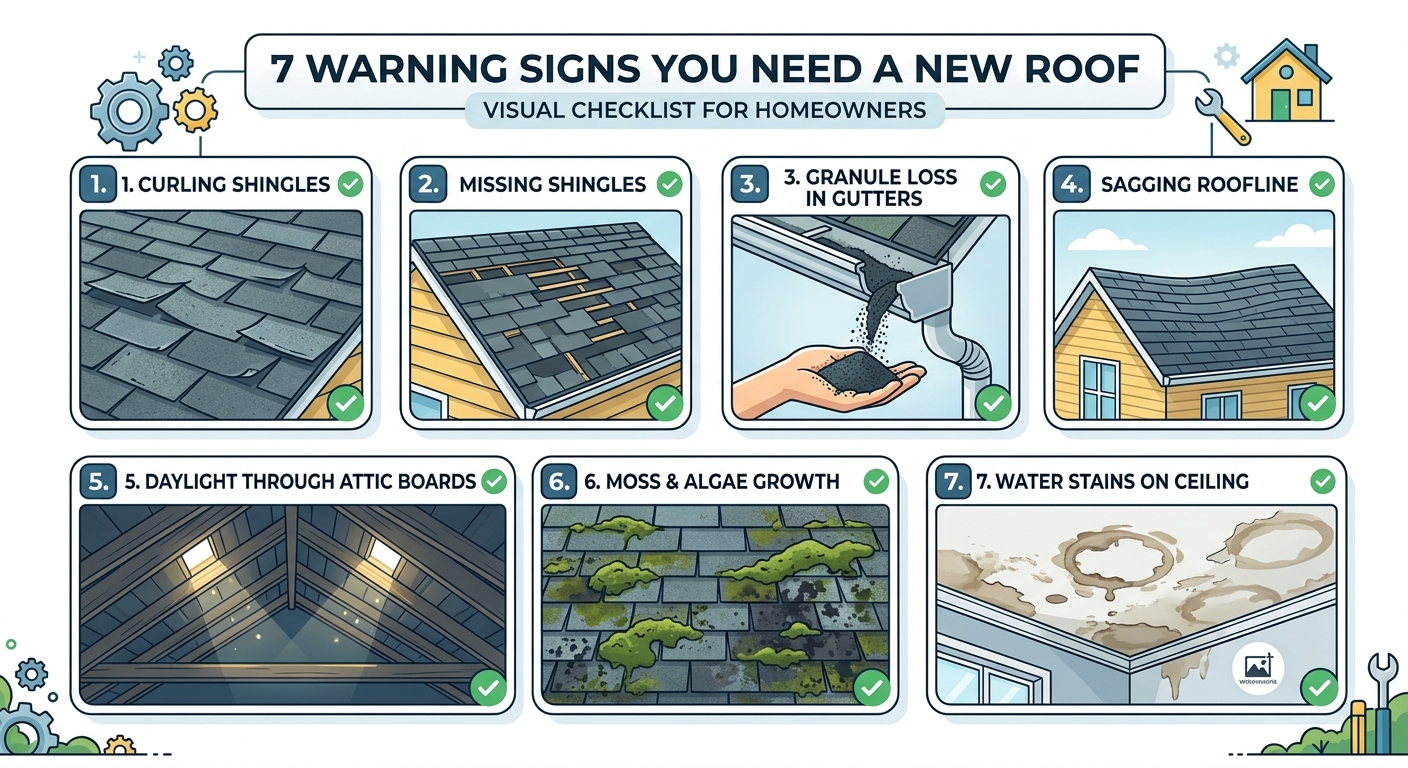
This guide covers the 7 clearest signs you need a new roof, indicating it has reached the end of its service life. If you are seeing two or more of these on your home, a replacement estimate is worth getting before the next storm season.
Why New Jersey Roofs Age Faster Than Average
NJ roofs take a beating. Ocean County and Monmouth County homeowners deal with salt air corrosion near the shore, nor'easters that bring high winds and ice loads, summer heat that bakes asphalt shingles, and freeze-thaw cycles every winter that work water into any existing crack.
Standard 3-tab asphalt shingles typically carry a 20 to 25-year rated lifespan, and architectural (dimensional) shingles are often rated for 30 years. In coastal NJ conditions, many roofs perform closer to the lower end of those ranges - especially if they were not installed with proper ventilation, ice barrier underlayment, or starter strips.
Not Sure If You Need a Repair or a Full Replacement?
Express Home Services - Licensed & Insured (HIC #13VH13950500)
📞 (609) 361-7686Sign 1: Your Roof Is Over 20 Years Old
Age is the single most reliable predictor of roof failure. If your roof is approaching or past the 20-year mark, it belongs on your watch list - regardless of whether you see any other obvious problems.
Asphalt shingles degrade chemically over time. The oils that keep the asphalt flexible gradually evaporate, leaving shingles brittle and prone to cracking. The granule layer - which protects the asphalt from UV exposure - thins out. Sealant strips on the shingle edges lose their adhesive strength.
A 22-year-old roof that "looks fine" from the yard may have significantly diminished structural integrity. One bad storm can turn a manageable situation into an emergency.
What to do: If your roof is 18 to 20+ years old, schedule a professional inspection even if you have no active leaks. A contractor can assess remaining life and help you plan rather than react.
Sign 2: Curling or Buckling Shingles
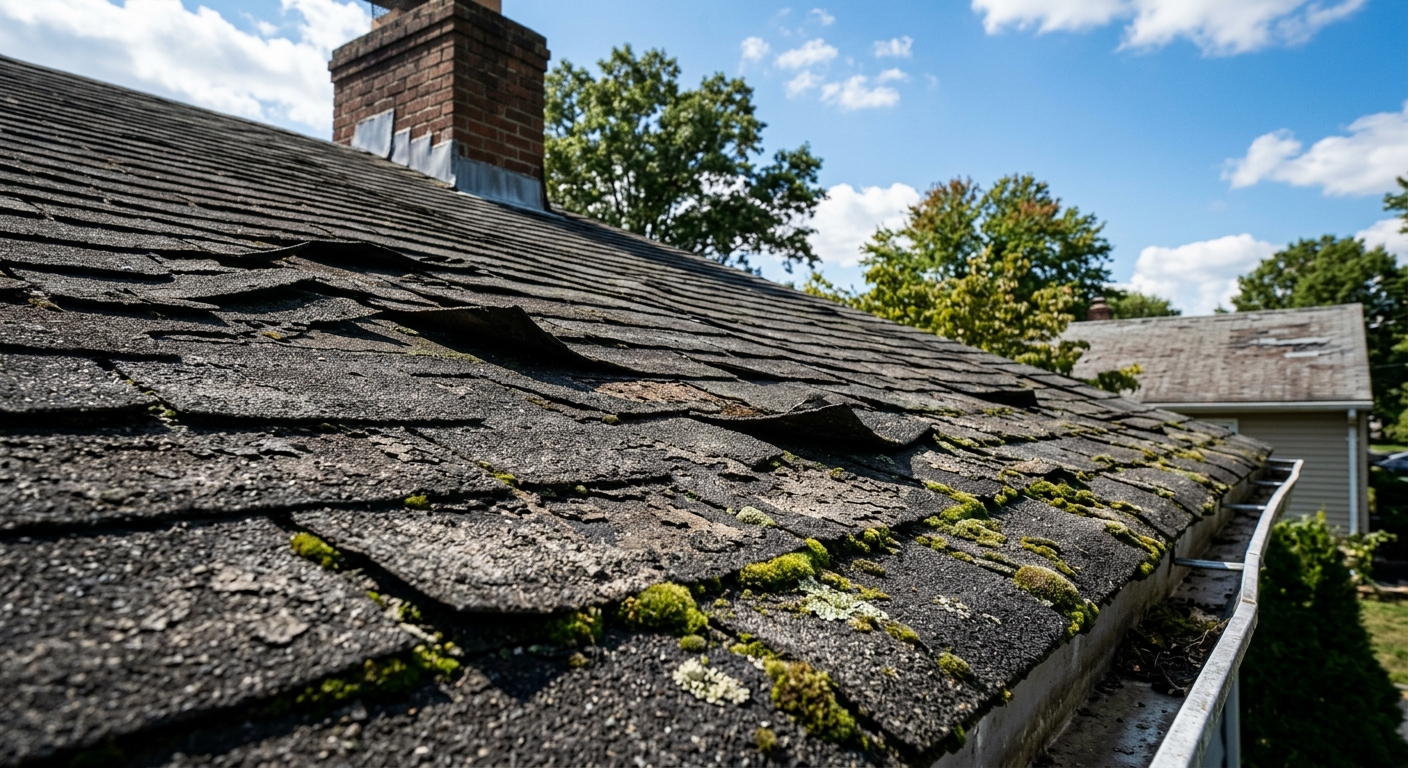
Curling is one of the most visible signs you need a new roof. There are two types:
- Cupping: The edges of the shingle turn upward, creating a concave shape. This is typically caused by moisture imbalance - the bottom of the shingle is absorbing moisture while the top dries out faster.
- Clawing: The middle of the shingle bulges upward while the edges stay flat. This is often a sign of heat-related aging or inadequate attic ventilation causing the deck to warp.
Either form of curling means the shingles have lost their ability to lay flat and seal against the deck. Water can get under them, wind can catch their edges, and ice dams in winter have a much easier time working moisture underneath.
A small number of curled shingles on an otherwise healthy roof might be repairable. Widespread curling across multiple sections of the roof means the material itself has aged past its functional lifespan.
Sign 3: Significant Granule Loss
Asphalt shingles are coated with ceramic granules that serve two purposes: UV protection for the underlying asphalt, and impact resistance from hail and falling debris. As shingles age, those granules loosen and wash off.
You can spot granule loss in several places:
- Gutters and downspouts: Look for dark, sand-like material collecting in your gutters after rain
- At the base of downspouts: Granules accumulate where water exits and slows down
- On the shingles themselves: Areas that look lighter, smoother, or have inconsistent coloring compared to the rest of the roof
- On the ground: After a hard rain, check near downspout discharge points
Some granule loss in the first year or two after installation is normal - it is excess granules embedded during manufacturing. Significant loss on an older roof is a sign that the shingles are past their protection peak.
Once the granule layer thins, UV degradation of the asphalt accelerates rapidly. A roof losing granules at scale is typically within a few years of failure even if it is not actively leaking yet. Granule loss is also one of the key indicators to look for when inspecting your roof after a storm.
Sign 4: Missing, Cracked, or Broken Shingles
Individual damaged shingles can sometimes be replaced without a full roof overhaul. But the pattern of how shingles are failing tells you a lot about whether repair or replacement is the right answer.
Ask yourself:
- Is damage limited to a few shingles in one area, or is it appearing in multiple sections?
- Are the shingles breaking in a brittle, clean-snap pattern (a sign of age-related brittleness) or tearing (more consistent with impact or wind)?
- When you compare the damaged areas to the rest of the roof, does the rest look notably different in color and texture - or does the whole roof look aged?
Brittle shingles that crack easily during inspection or break in low-temperature conditions are a clear sign the entire roof has aged past the point where repairs make practical sense. Replacing one broken shingle on a roof where all shingles are brittle just delays the inevitable.
| Damage Pattern | Likely Cause | Repair vs. Replace |
|---|---|---|
| 1-5 missing shingles, isolated area | Wind event, localized wear | Repair likely viable |
| Cracks across multiple sections | Age-related brittleness | Replacement recommended |
| Shingles breaking during inspection | Advanced age, thermal cycling | Replacement recommended |
| Granule loss + cracking together | End of service life | Replacement recommended |
| Storm damage on roof under 10 years | Weather event | Repair likely viable |
| Recurring repairs in same area | Structural or flashing issue | Investigate root cause first |
Sign 5: Sagging Roof Deck
A sagging or wavy roof deck is a serious structural sign that warrants urgent attention. Unlike cosmetic shingle issues, deck sagging means there is a problem with the underlying structure - either the roof deck (plywood or OSB sheathing), the rafters, or both.
Causes of deck sagging include:
- Long-term water intrusion: Prolonged leaks rot the plywood decking and eventually compromise the framing
- Overloaded structure: Multiple layers of old shingles add weight the original structure was not designed for
- Inadequate original framing: Some older homes in Ocean County, particularly smaller shore properties, have lighter roof framing that has deflected over time
- Insect damage: Termites or carpenter ants can hollow out rafters and lead to structural deflection
Walk the perimeter of your home and look along the roofline. It should be a straight, consistent line from the ridge down to the eave. Any visible waviness, dips, or sags in that profile are a sign that the structure below the shingles has been compromised.
A sagging roof is not just a replacement candidate - it may require structural repairs to the deck or framing before new shingles can be installed. This is why a professional inspection matters: the scope of work goes beyond materials.
Sign 6: Daylight Through the Attic Boards
This one is straightforward: if light can get in, so can water.
Go into your attic during daylight hours and let your eyes adjust. Turn off any lights and look at the underside of the roof deck. Any pinpoints or streaks of natural light coming through the boards mean there are holes, gaps, or separations in the roof assembly.
Pay attention to:
- Around penetrations: Plumbing vents, bathroom exhaust fans, and chimney bases are common failure points where flashing can separate
- At valleys: The V-shaped low points where two roof planes meet channel high water volume and are prone to wear
- Along the ridge: Ridge cap shingles take the most wind stress and can lift or crack, leaving gaps at the peak
Daylight at even one penetration is worth immediate attention. Daylight in multiple areas, or along the field of the roof deck itself, points to widespread failure that makes replacement the practical solution.
Sign 7: Persistently High Energy Bills
This one surprises many homeowners, but your roof plays a direct role in your home's energy efficiency. An aging or damaged roof can drive heating and cooling costs up in a few different ways.
First, if the roof underlayment or decking has absorbed moisture, the insulating properties of your attic floor insulation can be compromised. Wet insulation loses R-value rapidly.
Second, many older roofs were installed without adequate ventilation - proper ridge vents and soffit vents that allow the attic to breathe. When hot air builds up in an under-ventilated attic in summer, it radiates heat down into your living space and makes your AC work much harder.
Third, gaps or failures in the roof assembly can allow conditioned air to escape or outside air to infiltrate, directly affecting your heating and cooling loads.
If your energy bills have climbed steadily over the past few years and you cannot attribute it to a change in usage or appliance age, have a roofing contractor look at ventilation and insulation during any roof inspection.
| Warning Sign | Risk Level | Typical Urgency |
|---|---|---|
| Roof over 20 years old | Moderate | Plan inspection this season |
| Curling or buckling shingles | Moderate to High | Inspect within 30-60 days |
| Heavy granule loss | Moderate | Inspect within 30-60 days |
| Multiple missing or cracked shingles | High | Inspect within 2-4 weeks |
| Sagging roof deck | Very High | Inspect within 1-2 weeks |
| Daylight through attic boards | Very High | Inspect immediately |
| Repeated leaks after repairs | High | Replacement likely needed |
See 2 or More of These Signs? Get a Free Replacement Estimate.
Express Home Services - Licensed & Insured (HIC #13VH13950500)
📞 (609) 361-7686What a Roof Replacement Costs in NJ
Roof replacement costs in New Jersey vary based on roof size, pitch, material choice, and the condition of the existing deck and framing. Here is a general framework for Ocean County and Monmouth County homeowners:
- Architectural asphalt shingles (the most common choice): typically $8,000 to $16,000 for an average single-family home
- Premium shingles (impact-resistant, Class 4): typically $12,000 to $22,000 - sometimes worth it for the insurance discount in storm-prone areas
- Deck replacement: If significant sections of plywood need replacing, add $1,000 to $3,000 or more depending on the extent
- Two-story vs. one-story: Steeper pitches and taller structures add to labor costs
These are general ranges - a proper estimate requires measuring your roof, assessing the existing deck condition, and confirming scope of work. Any contractor who gives you a firm number over the phone without an inspection is not giving you a real estimate. If you are weighing costs against a partial fix, our guide on roof repair vs. replacement walks through the decision in detail.
How Many Signs You Need a New Roof Are Enough to Act?
There is no universal threshold, but the pattern matters more than the count. The table below summarizes urgency for each of the 7 signs you need a new roof, so you can prioritize what you found during your own inspection.
| Sign | Urgency | Action |
|---|---|---|
| Roof over 20 years old | Moderate | Schedule inspection this season |
| Curling or buckling shingles | Moderate to High | Inspect within 30-60 days |
| Heavy granule loss | Moderate | Inspect within 30-60 days |
| Multiple missing or cracked shingles | High | Inspect within 2-4 weeks |
| Sagging roof deck | Very High | Inspect within 1-2 weeks |
| Daylight through attic boards | Very High | Inspect immediately |
| Rising energy bills (roof-related) | Low to Moderate | Include in next inspection |
If you are seeing two or more of the "Moderate to High" signs you need a new roof, do not delay getting an estimate. The gap between a manageable repair and a full interior water damage claim can be measured in months in a New Jersey winter.
One practical note on NJ coastal properties: the shore area adjustment for material lifespan means the thresholds in the table above apply a year or two earlier than they would for an inland home. A roof showing heavy granule loss at 15 years in Ship Bottom or Seaside Park is closer to end of service life than the same roof at 15 years in Freehold or Toms River.
How to Choose a Roofing Contractor in New Jersey
Before signing any contract for roof replacement in NJ, verify these basics:
- HIC License: All home improvement contractors in NJ must hold an active Home Improvement Contractor license from the Division of Consumer Affairs. You can verify a license online at the NJ DCA website. Express Home Services holds HIC #13VH13950500.
- Insurance: Ask for a certificate of general liability and workers' compensation. If a worker is injured on your property and the contractor is uninsured, you could be liable.
- Written contract: NJ law requires all home improvement contracts over $500 to be in writing. The contract must include specific language about start and completion dates, total price, payment schedule, and right of cancellation.
- Local references: Ask for references from jobs completed in your county within the past two years.
Be cautious of contractors who show up unsolicited after a storm, pressure you to sign immediately, or ask for full payment upfront.
Frequently Asked Questions About Signs You Need a New Roof
How many signs you need a new roof do I have to see before I should replace it?
There is no magic number. One sign - like a sagging deck or daylight in the attic - can be enough to warrant immediate action. For lower-urgency signs like granule loss or minor curling on a 15-year-old roof, seeing two or three signs together is generally a strong indicator that replacement planning should start. The key factor is whether the issues are isolated and repairable, or widespread and indicative of overall material aging.
Is it ever better to repair rather than replace an aging roof?
Yes, in some cases. If your roof is relatively young (under 12 to 15 years), damage is localized to a small area, and the rest of the roof is in genuinely good condition, a repair can make sense. The calculation changes when the roof is older, when matching shingles are no longer available (meaning repairs look patchy), or when the cost of repeated repairs over the next few years would approach the cost of replacement anyway.
Can I put new shingles over my existing roof?
In some cases, NJ code allows a second layer of shingles to be installed over an existing layer, which can reduce labor costs. However, this is not always advisable. Adding weight can stress the framing, the inspector cannot examine the deck condition, and the new roof will have a shorter effective lifespan due to reduced ventilation and the heat buildup from the old layer below. Most experienced contractors recommend a full tear-off for a quality, long-lasting installation.
Will homeowners insurance cover roof replacement due to age?
Typically, no. Standard homeowners insurance policies cover sudden, accidental damage - storm, hail, falling trees - not wear and aging. If your roof is 20 years old and simply needs replacing, that is generally not a covered event. However, if a storm damages an aging roof, the insurance company may cover the damage-related replacement while depreciating the claim based on remaining roof life. Understanding your policy before you need to file a claim is always worthwhile.
How long does a roof replacement take in New Jersey?
Most residential roof replacements in Ocean County and Monmouth County are completed in one to three days, depending on roof size and complexity. A straightforward tear-off and re-roof on a standard single-story ranch can often be done in a single full day. Larger homes, steep pitches, or roofs requiring significant deck repair take longer. Weather is a factor - contractors cannot install shingles in rain or on a wet deck.
Get a Free Roof Replacement Estimate in Monmouth and Ocean County
Express Home Services has been serving NJ homeowners with licensed roofing repairs and replacements throughout Monmouth County and Ocean County. We provide written estimates with no pressure and no obligation.
If you are seeing two or more of these signs on your roof, do not wait for the next storm to make the decision for you. A annual spring roof checkup is a good habit regardless, but if your roof is showing these warning signs, the time to act is now.
Call (609) 361-7686 today to schedule your free estimate. We serve Ship Bottom, Toms River, Brick, Barnegat, Lacey Township, Freehold, Middletown, and the surrounding communities. HIC License #13VH13950500.