
How to Spot Roof Storm Damage: A Guide for NJ Homeowners
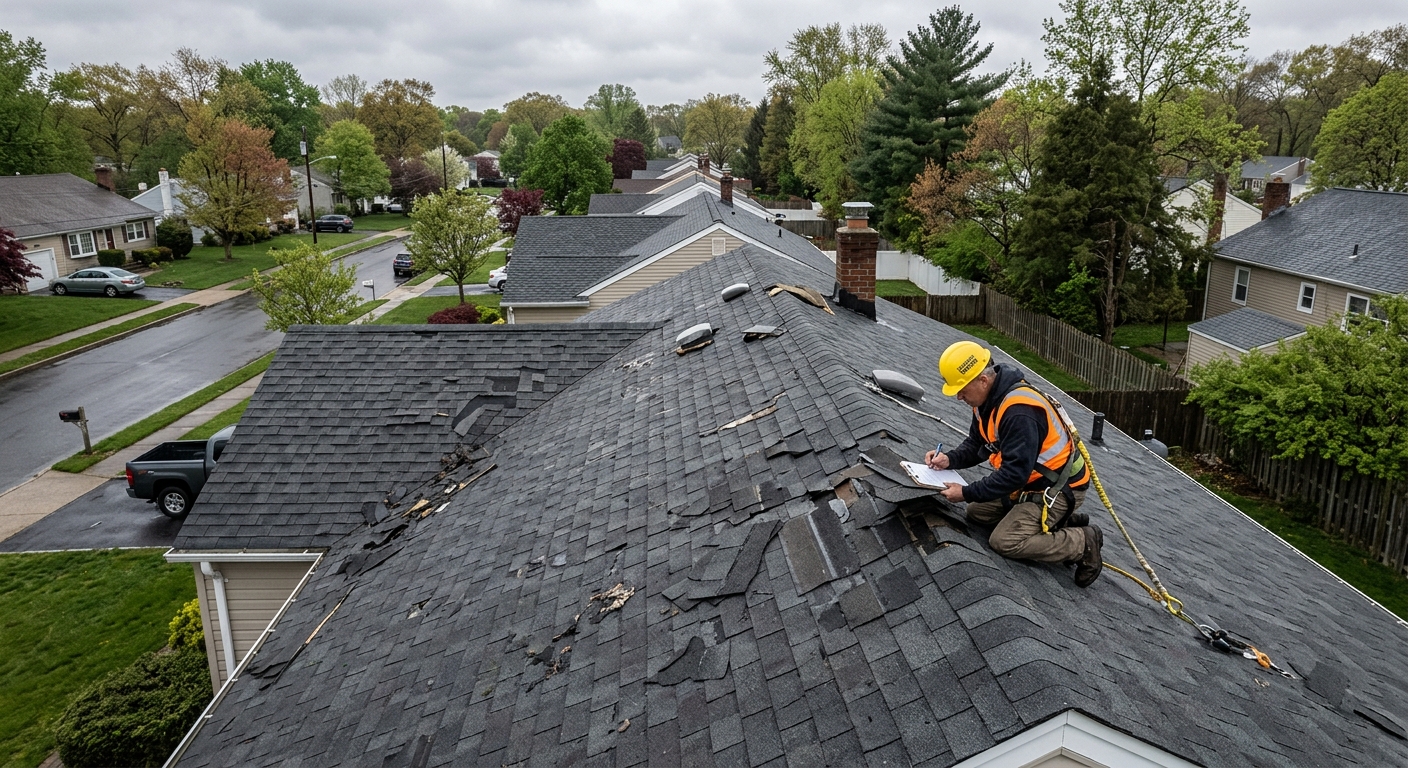
Roof storm damage is one of the most common - and most underestimated - problems homeowners face in New Jersey. After a severe storm rolls through Ocean County or Monmouth County, the damage can be easy to miss from the ground. What looks like a few missing shingles from the yard can actually mean thousands of dollars in water infiltration damage by the time you notice a ceiling stain.
This guide walks you through exactly what to look for after a storm, how to tell roof storm damage from wind versus hail versus water infiltration, and when you need a licensed contractor to take over. We cover what you can safely inspect yourself and what you should leave to the professionals.
Understanding the Types of Roof Storm Damage in New Jersey
New Jersey weather is hard on roofs. The coast gets nor'easters, tropical-storm remnants, and summer squalls. Inland areas in Monmouth County see ice storms, high winds, and hail. Each storm type creates a different damage signature.
Knowing which type of damage you are dealing with helps you communicate clearly with your insurance adjuster and your roofing contractor.
Wind Damage
Wind is the most common cause of roof damage in NJ. Sustained winds above 50 mph can lift, crack, or completely remove asphalt shingles - especially on roofs older than 10 to 12 years where shingles have lost their flexibility.
Look for these specific signs of wind damage:
- Missing shingles: Large bare patches where shingles were lifted and carried away
- Lifted or curling shingle edges: Shingles that are still attached but have their edges peeling up from the roof deck
- Creased or folded shingles: Shingles that bent backward in the wind and then came back down - they are cracked internally even if they look flat
- Exposed nail heads: When wind strips the overlapping shingle above, it leaves fasteners exposed to rain
- Damaged ridge cap: The cap shingles along the peak of the roof take the most wind stress and are often the first to go
One pattern to watch: wind damage often appears in lines or sections rather than randomly scattered. If you see a strip of missing shingles on one side of the roof, wind direction during the storm is likely the cause.
Hail Damage
Hail damage can be subtle and easy to miss until it is too late. Unlike wind damage, you often cannot see hail hits clearly from the ground. Hailstones punch through the granule layer of asphalt shingles and leave the underlying mat exposed.
Signs of hail damage include:
- Circular dents or bruises on shingles - sometimes visible as dark spots from the ground
- Granule loss in round patterns (versus the straight streaks you see from normal wear)
- Dented gutters and downspouts - if hail hit your gutters, it hit your roof
- Dented aluminum flashing around chimneys, skylights, or vent pipes
- Damaged soft metals: Check your AC condenser fins, painted wood trim, and fascia boards for dents - these surfaces show hail hits clearly even when shingles do not
The size of the hailstone matters. Stones smaller than 1 inch typically cause cosmetic damage. Stones 1.5 inches or larger can crack shingles, damage the mat, and start the clock on premature failure.
Water and Moisture Damage
Sometimes the storm itself is not high-wind or high-impact - just sustained, heavy rain. If your roof has any existing weak points, prolonged rain will find them.
Look for:
- Water stains on ceilings or walls inside - brown rings or spreading discoloration after a storm
- Bubbling or peeling interior paint near exterior walls
- Wet insulation or a musty smell in the attic after rain
- Pooling water in low spots on flat or low-slope roof sections
- Rotted or soft decking visible from the attic - press lightly on the plywood from below; if it gives, it has been wet for a while
Storm Hit Your Home? Get a Free Roof Inspection Today.
Express Home Services - Licensed & Insured (HIC #13VH13950500)
📞 (609) 361-7686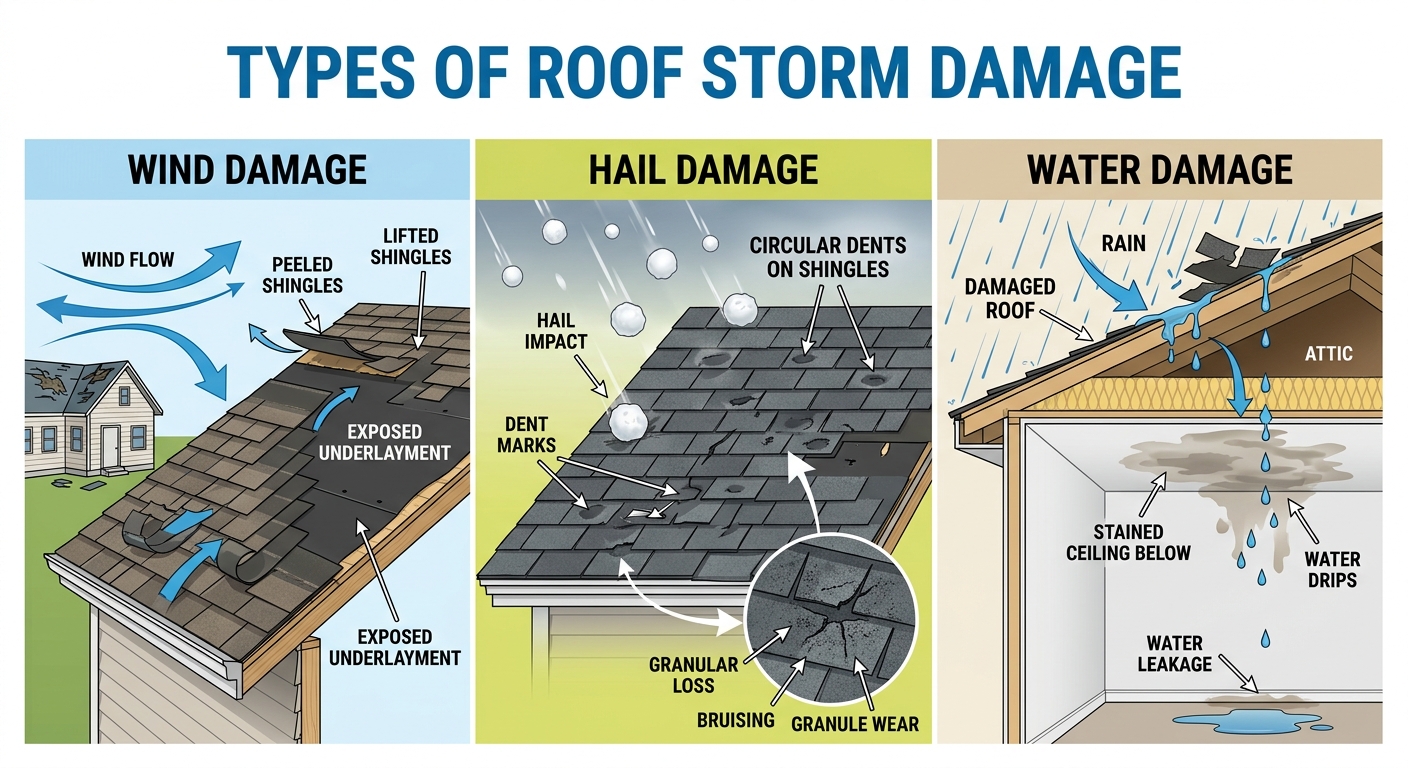
How to Safely Inspect Your Roof After a Storm
Before you do anything, a word on safety: most homeowners should stay off their roof. Wet roofs are slippery. Storm-damaged roofs can have compromised decking that gives way without warning. A ground-level and attic inspection will tell you most of what you need to know.
Ground-Level Inspection (Safe for Any Homeowner)
Start by walking the perimeter of your home with the storm still fresh in your mind. Bring your phone to take photos of anything that looks off.
What to check from the ground:
- Walk a full circle around the house and look up at every visible roof surface
- Check the yard for shingle pieces, granules in flowerbeds, or broken ridge cap material
- Look at your gutters - are they sagging, separated from the fascia, or full of dark granules?
- Examine the drip edge (the metal strip at the roof edge) for bends or separations
- Look at any visible flashing around chimneys, dormers, or skylights
- Check siding near the roofline for dents, which indicate hail came in at an angle
Binoculars can help you get a closer look at the ridge and upper sections of the roof without leaving the ground.
Attic Inspection
The attic is often the most revealing place to check after a storm and you can do this safely.
Go up with a flashlight in daylight and turn off your light for a moment. Look for any pinpoints of daylight coming through the roof deck. Even a small hole is a problem. Also look for:
- Active dripping or wet spots on the rafters
- Water stains on the roof deck (older stains are dark, newer ones may still be wet)
- Any insulation that looks matted, discolored, or smells musty
- Daylight around any penetrations: plumbing vents, bathroom fans, or chimney bases
Take photos of everything you find. Your insurance company will want documentation.
When to Get a Professional on the Roof
A professional inspection is the right call when:
- You saw large hail (golf ball size or bigger) during the storm
- You are missing shingles and cannot determine the extent from the ground
- You found water intrusion in the attic or ceiling stains appeared after the storm
- Your roof is older than 10 years and took a direct hit from a severe storm
- You are filing an insurance claim - a professional inspection report carries far more weight than homeowner photos alone
Roof Storm Damage by Shingle Age: What to Expect
The age of your roof significantly affects how much damage a storm can cause. Older shingles are brittle, have less granule coverage, and are more likely to crack under impact or lift under wind pressure. If you are already noticing multiple warning signs on your roof, a storm may push it past the repair threshold.
| Roof Age | Wind Vulnerability | Hail Vulnerability | Expected Damage Threshold |
|---|---|---|---|
| 0-5 years | Low | Low to Moderate | Damage typically requires 70+ mph winds or 1.5"+ hail |
| 5-10 years | Moderate | Moderate | Damage possible at 55-60 mph winds or 1" hail |
| 10-15 years | High | High | Damage likely at 45 mph winds; hail above 0.75" causes impact marks |
| 15-20 years | Very High | Very High | Any significant storm event warrants a professional inspection |
| 20+ years | Extreme | Extreme | Post-storm inspection should be standard after any named storm |
Understanding Storm Damage Insurance Claims in NJ
Filing an insurance claim for roof storm damage is common in New Jersey - but the process has specific steps and timing that affect your outcome.
Key facts about NJ homeowner insurance and storm damage:
- Most policies cover sudden, accidental storm damage (wind, hail, fallen trees) but not gradual deterioration
- NJ has no universal statute of limitations for storm claims, but most policies require "prompt" notification - filing within 30 days of the storm is a strong practice
- Insurance adjusters assess damage using standard industry criteria, which means cosmetic damage alone may not meet the threshold for a covered claim
- You have the right to have a licensed contractor present during the adjuster's inspection
- If you disagree with the adjuster's findings, you can hire a public adjuster or request a re-inspection
| Step | Action | Timing |
|---|---|---|
| 1 | Document damage with photos and video | Same day as storm |
| 2 | Schedule a professional inspection | Within 3-5 days |
| 3 | Notify your insurance company | Within 7-14 days |
| 4 | Meet adjuster on-site with contractor present | At adjuster's scheduled time |
| 5 | Review settlement offer carefully | Before signing anything |
| 6 | Complete repairs with licensed contractor | After claim approval |
A licensed NJ contractor with storm damage experience can help you navigate the claims process and make sure storm-related damage is properly documented before repairs begin. Understanding whether you need a repair or full roof replacement is an important early step in this process.
Common Mistakes Homeowners Make After a Storm
After the storm passes, urgency and stress can lead to decisions that hurt you later.
Avoid these mistakes:
- Waiting too long to inspect: Water damage compounds quickly. A small leak left for weeks can rot decking and framing.
- Patching without a full inspection: Tarping or patching one visible spot without checking the full roof means hidden damage may continue to worsen.
- Hiring an out-of-state "storm chaser": After major storms, unlicensed contractors flood NJ offering cheap, fast repairs. Always verify a Home Improvement Contractor (HIC) license with the NJ Division of Consumer Affairs before signing anything.
- Filing too early without documentation: Submit your claim with solid evidence - photos, a contractor's written assessment, and attic documentation all strengthen your case.
- Ignoring soft metal damage: If hail dented your gutters or AC unit but your shingles look okay, have a professional inspect anyway. Hail that damages metal almost always affects shingles too - it just shows up differently.
Avoid Costly Mistakes - Let a Licensed Inspector Assess Your Roof.
Express Home Services - Licensed & Insured (HIC #13VH13950500)
📞 (609) 361-7686When Roof Storm Damage Means Replacement vs. Repair
Not every storm event means a full roof replacement. But some do. Here is a general framework for deciding between roof repair and full replacement:
Repair is typically appropriate when:
- Damage is localized to a specific section (under 25-30% of the total roof area)
- The roof is under 10 years old and shingles are in otherwise good condition
- The roof deck is intact and dry
- The flashing and ridge cap are undamaged
Replacement is typically appropriate when:
- Storm damage covers more than 30% of the roof surface
- The roof is 15 years or older and took significant damage
- The deck has soft spots, rot, or multiple layers of old shingles
- Multiple storms have led to multiple repairs and the roof has no remaining uniform coverage
In some cases, insurance settlements actually favor replacement over repair when widespread hail or wind damage makes a matching replacement of only damaged sections impractical.
Frequently Asked Questions About Roof Storm Damage
How long after a storm do I have to file a roof damage insurance claim in NJ?
There is no single statewide deadline, but your policy likely requires "prompt" notice - meaning as soon as reasonably possible after the damage occurs. Filing within 30 days of the storm is a strong standard to follow. Waiting months can give the insurance company grounds to question whether the damage was truly from the stated storm event. Document the storm date, take photos immediately, and notify your insurer as soon as you have assessed the situation.
Can I tell if I have hail damage without getting on my roof?
Yes, in many cases. Check your gutters, downspouts, aluminum fascia trim, window screens, and AC condenser unit for dents. If soft metals took hits, your shingles almost certainly did too. From the ground, look for dark circular spots on shingles - these are granule impact zones. If you have asphalt shingles, check the gutters and downspouts for an unusual volume of dark granule material after the storm.
Does roof storm damage always cause an immediate leak?
Not always. Wind and hail can damage shingles in ways that do not cause an immediate leak but significantly shorten the roof's remaining life. Cracked shingles and granule loss leave the asphalt mat exposed to UV degradation, which accelerates failure. A roof that took a bad storm hit in spring can start leaking the following fall or winter when temperatures drop and ice forms in compromised areas.
What does roof storm damage cost to repair in New Jersey?
Costs vary widely depending on the extent of damage, roof pitch, materials, and local market conditions. Minor repairs - replacing a section of shingles or fixing flashing - typically run anywhere from a few hundred to a few thousand dollars. A full roof replacement in Monmouth County or Ocean County commonly ranges from $8,000 to $20,000 or more depending on roof size and materials. If you have a covered insurance claim, your out-of-pocket cost may be limited to your deductible.
Should I put a tarp on my roof right after a storm?
If you have an active leak or large sections of missing shingles, a tarp can be a smart temporary measure to prevent further water damage while you wait for a contractor inspection and insurance review. Keep your receipts - many insurance policies reimburse reasonable emergency mitigation costs. However, do not attempt to tarp a steep or wet roof yourself. Contact a licensed roofing contractor for emergency tarping services.
How do I know if I need a full roof inspection or just a visual check?
A ground-level visual check is a good starting point, but it has real limits - especially for hail damage, which requires close-up inspection of shingle surfaces. Any time a named storm or severe weather event has affected your area, a professional inspection is the safer call. A licensed roofing contractor can provide a written assessment suitable for an insurance claim, which a DIY visual inspection cannot. Reading up on spring roof maintenance practices can also help you stay ahead of seasonal damage patterns.
NJ Storm History and Roof Storm Damage Patterns
Understanding the storm events most likely to cause roof storm damage in New Jersey helps you know when to inspect and what to look for.
Nor'easters are the dominant roof-damage event for most of Monmouth and Ocean County. Unlike summer thunderstorms, nor'easters deliver sustained high winds for 12-36 hours. Sustained winds of 40-60 mph with gusts to 75+ mph work under flashing seams, stress ridge cap shingles, and peel up any area where sealant has aged. After a major nor'easter, roof storm damage inspection is warranted on any roof over 10 years old - even if nothing looks obviously wrong from the ground.
Tropical storm remnants bring the heaviest single-event rainfall totals to coastal NJ. Unlike nor'easters, the primary concern from tropical remnants is not wind but prolonged water infiltration. If your roof has any pre-existing weakness - a failing flashing seal, granule-depleted shingles, or a cracked pipe boot - a 6-10 inch rainfall event will find it.
Summer hail events are less frequent in NJ than in the Midwest, but they happen. Hail above 1 inch causes measurable granule impact damage to asphalt shingles and often dents gutters, downspouts, and AC condenser fins. After any confirmed hail event above 1 inch in your zip code, a professional roof storm damage inspection is the right call regardless of visible symptoms from the ground.
Freeze-thaw cycles from January through March cause incremental roof storm damage that adds up over multiple winters. Water that gets under a shingle or into a cracked flashing joint freezes, expands, and widens the opening. What starts as a hairline crack becomes a visible gap after three or four freeze-thaw cycles. The cumulative roof storm damage from mild winters is often not discovered until a heavy spring rain.
Get a Storm Damage Roof Inspection from Express Home Services
Express Home Services serves homeowners throughout Monmouth County and Ocean County, NJ, with licensed roof inspection, repair, and replacement. We are HIC licensed (#13VH13950500) and can provide written storm damage assessments for insurance claims.
If your home was affected by a recent storm, do not wait for a ceiling stain to show up before calling. Early inspection and documentation protects your home and your insurance claim.
Call us today at (609) 361-7686 to schedule your storm damage inspection. We serve Ship Bottom, Toms River, Brick, Lakewood, Freehold, Long Branch, and the surrounding Ocean and Monmouth County communities.